
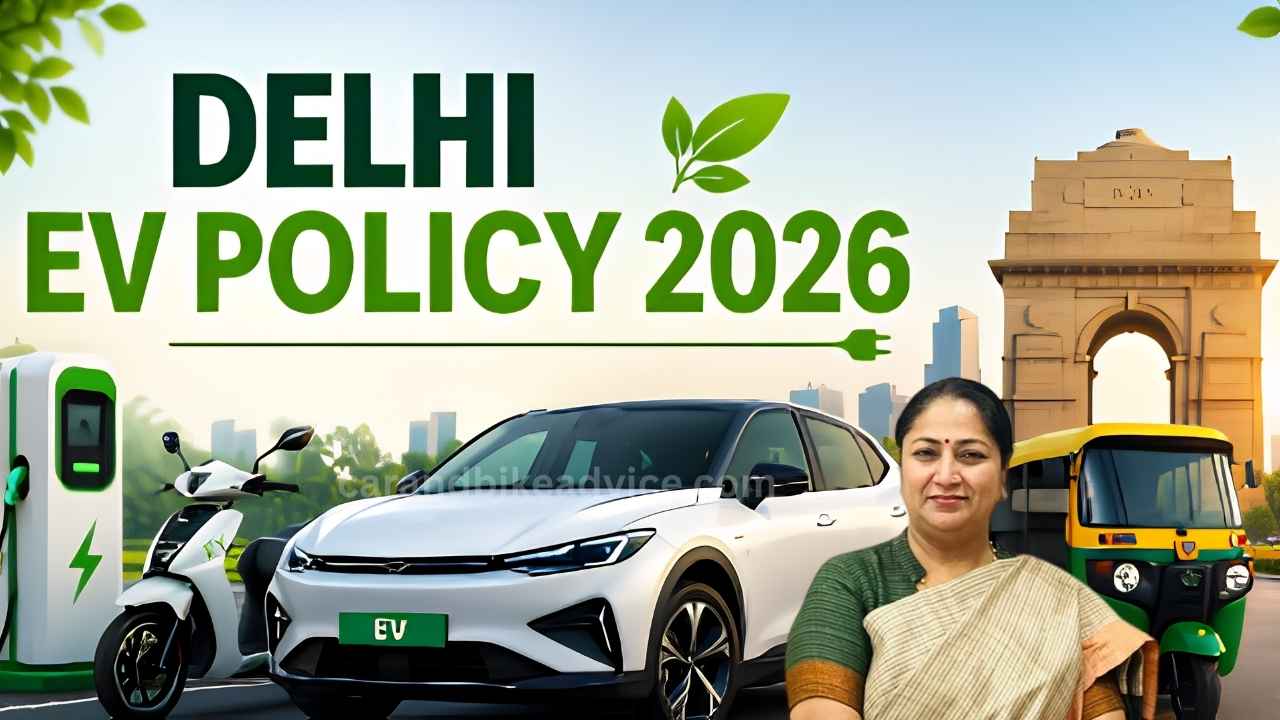
Delhi EV Policy 2026 Officially Release with ₹15,000 crore EV push, tax-free electric cars, ₹1 lakh scrappage incentive, 32,000+ charging points, & bring end to new petrol vehicle registrations.
Delhi is preparing for its boldest electric mobility revolution of till now. Yes, with the approval of the Delhi EV Policy 2026, the Capital unveiled an ambitious ₹15,000 crore plan to accelerate electric mobility between 1 July 2026 to 31 March 2030. The policy brings 100% road tax and registration fee exemptions for electric cars priced up to ₹30 lakh, purchase incentives of upto ₹1 lakh, attractive scrappage benefits, and a network of 32,000+ public charging stations.
Not just that Policy also introduces a phased end to new fossil-fuel vehicle registrations, allowing only electric autorickshaws, cargo three-wheelers and N1 light commercial goods carriers from 1 January 2027 and all new two-wheeler registrations turning electric from 1 April 2028 which looks one of India’s boldest moves to reduce vehicular pollution and fast-track EV adoption.
No New Petrol Two-Wheelers, 3-Wheelers, & Commercial Vehicles
By the heading itself this must be clear that the biggest shocker in the policy is the timeline that puts fossil-fuel registrations at the end. From 1 January 2027, Delhi will register only electric autorickshaws, cargo three-wheelers, and N1 light commercial goods carriers. And 1 April 2028 marks as the end of new petrol and CNG two-wheeler registrations. Existing vehicles remain unaffected but every new purchase in these categories will gradually transition to electric mobility.
100% Road Tax Waiver & EV Purchase Incentives
Another big highlight one must look at is the Road Tax Waiver & Incentives. After this policy, buying an electric vehicle in Delhi is going to become more cheaper. As the policy offers a 100% exemption on road tax and registration fees for battery electric cars priced upto ₹30 lakh. Not just that, Buyers will also receive purchase incentives through Direct Benefit Transfer (DBT) that includes upto ₹30,000 for electric two-wheelers, ₹50,000 for electric three-wheelers, and ₹1 lakh for eligible N1 electric commercial trucks.
Scrappage Benefits Upto ₹1 Lakh
With all New Electric Registrations, the policy is also looking for old vehicles scrapping. Well, to reduce pollution, Delhi needs solution for older vehicles that created more plouttion then new Electric ones. This means polluting vehicles will be off the road which directly means helping owners to switch. For this Delhi EV Policy 2026 offers scrappage incentives ranging from ₹10,000 for two-wheelers and ₹25,000 for three-wheelers to ₹50,000 for N1 trucks. Owners scrapping eligible BS-IV or older passenger cars to buy an EV will receive benefits of upto ₹1 lakh.
32,000+ Charging Stations in Delhi
To grow EV market or this Electric Revolution success depends on the charging infrastructure and Delhi knows it. That’s why government plans to install more than 32,000 public EV charging points across markets, office complexes, residential areas, and other high-footfall locations. The plan also includes dedicated residential charging meters and a online portal for subsidy applications, ensuring convenient charging keeps pace with the city’s rapidly growing electric vehicle ecosystem.
EV Rules For Schools & Public Fleets
All the Schools, Government Fleets & Commercial Operators are shifting into EV modes. Well, this means Delhi’s EV push goes beyond private vehicles and targets large fleets that run every day. Under the Delhi EV Policy 2026, schools must convert 10% of their bus fleet to electric within 2 years, 20% within 3 years, and 30% by 31 March 2030. Government departments will buy only EVs for new fleet additions from 2027. Not just that, all the cab aggregators, delivery companies, and commercial fleet operators will also have to gradually switch to electric vehicles under the policy.
What About Hybrid Cars?
Sorry to hybrid car buyers as the hybrid buyers will not find any special incentives under the new policy. Well, earlier drafts proposed tax relief for strong hybrids but the final Delhi EV Policy 2026 removed that proposal. The official policy and Chief Minister Rekha Gupta’s Tweets confirm that only battery electric vehicles (BEVs) qualify for purchase subsidies, 100% road tax free, and registration fee waivers for EVs priced up to ₹30 lakh.
Still, if you are planning to buy a hybrid or alternative flex fuel vehicle but want to know any of the government incentives, then check out our report on “E22, E25, E27 and E30 Fuels Get Free From Excise Duty” to learn about the Centre’s separate policy supporting cleaner fuels.
Need of Delhi EV Policy 2026
This must not be surprising for everyone in Delhi that Why Delhi is taking such a big step? or What is need of Delhi EV Policy 2026? Well, the two word answer for this is Delhi’s Pollution. This must be known to all that the commercial goods vehicles, two-wheelers, and three-wheelers contribute a major share of the city’s road transport pollution.
With the help of this Delhi EV Policy 2026, the govt. want to encourage EV adoption through financial incentives, expand charging infrastructure, and smoothly end new fossil-fuel registrations in the most polluting segments. All this directly help the government motive to improve air quality while accelerating the transition to cleaner urban transportation.
Going through all this policy this is very much clear that the Delhi EV Policy 2026 is direct hint of ending of an era of fossil-fuel dominance in the Capital. Attractive incentives, stricter registration rules, and massive charging infrastructure investments make it a bold policy that rewards early EV adopters while pushing the entire transport ecosystem towards a cleaner future.