
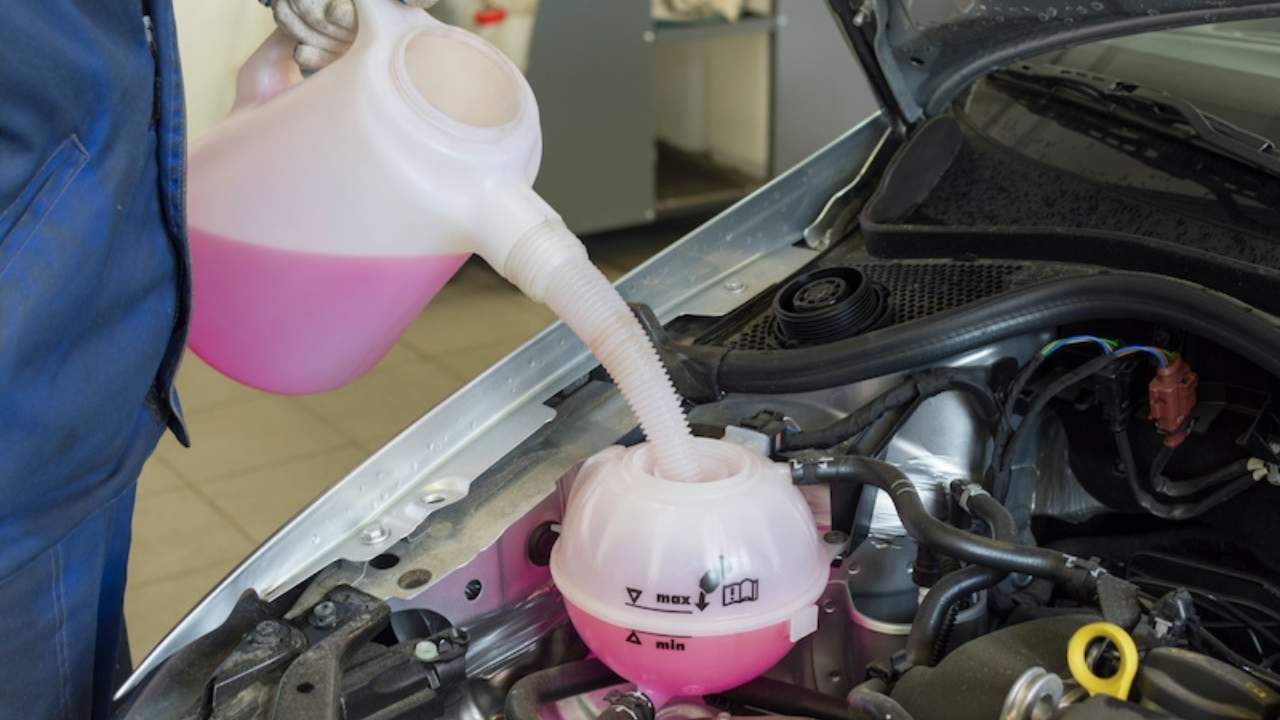
Many people think coolant is just another liquid in the car. Something like water that you can check later or ignore for a few days. The car is still running, so it feels like everything is fine. But the truth is very different.
Coolant is what keeps your engine from getting too hot while you drive. Without it, heat builds up quickly inside the engine. You may not see it immediately, but inside engine things start going wrong.
Driving with low coolant is like running your body without enough water on a hot day. You may keep going for a while, but this slowly damage starts happening.
So, what are you waiting for read the below detailed guide and get to know the simple way what really happens when you keep driving with low coolant.
What Is Coolant and What Does It Do
Before knowing about the Affects of Driving with Low Coolant, you must learn what is coolant and how it works. Well, the Coolant is a special liquid that flows through your engine. It absorbs heat and carries it away so the engine stays at a safe temperature. This Coolant is not just plain water, but it is a mix of water and chemicals that help in many ways.
Coolant Helps in Following Ways –
- Keep the engine from overheating
- Maintain a stable temperature
- Protect engine parts from damage
- Prevent rust and corrosion
When the coolant level is correct, your engine runs smoothly. But when it goes low, the whole system gets disturbed.
Issues You Face When You Drive With Low Coolant
After knowing about the role of Coolant in your car, you must generate curiosity to know What Happens If You Drive With Low Coolant?. Answer is not that simple. Check out each problem you face in your car, if you drive with low coolant.
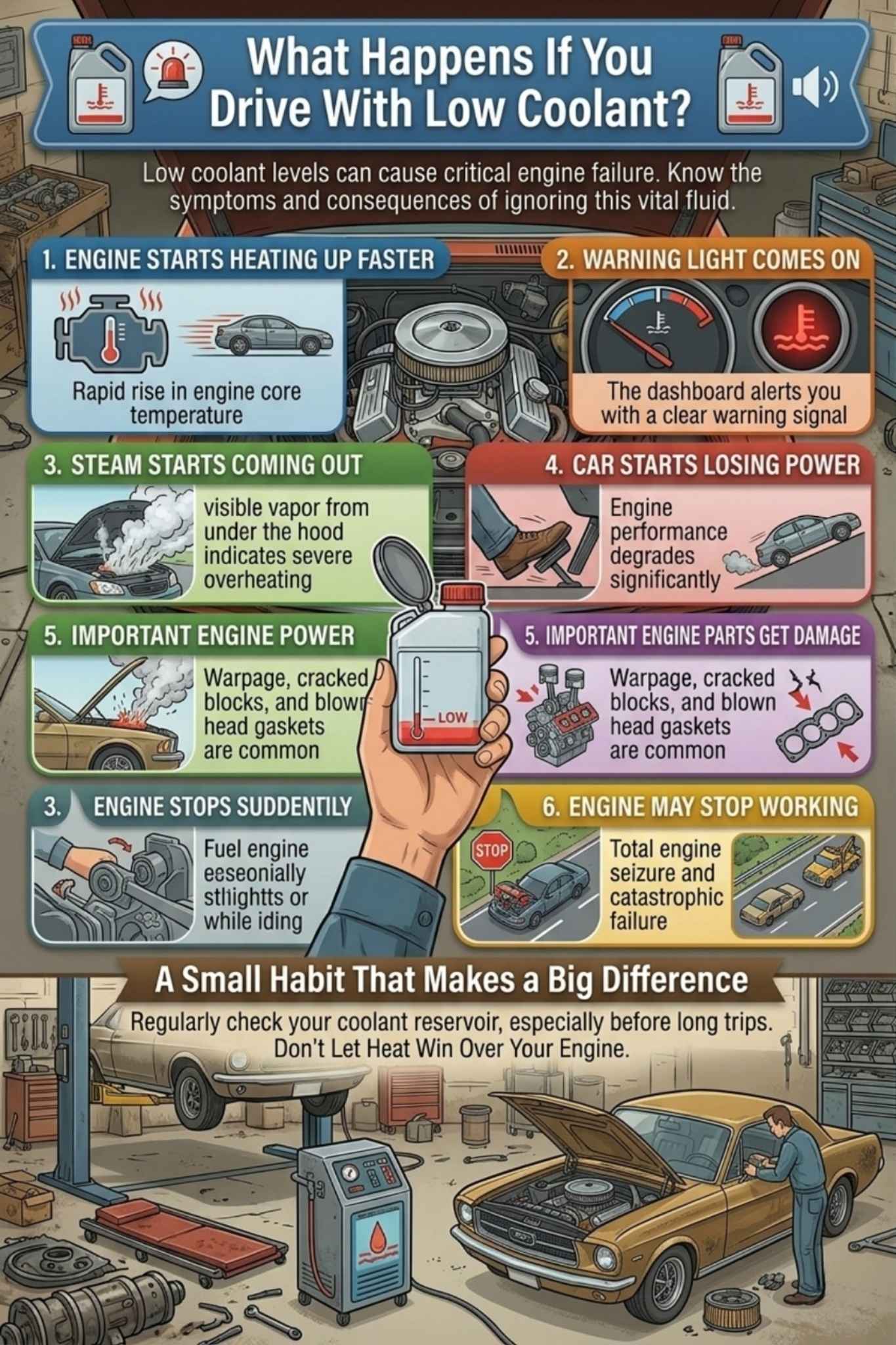
Engine Starts Heating Up Faster
When the coolant level goes low, there is not enough liquid to control the heat. As you drive, the engine keeps producing heat like it always does. But now, there is less coolant to carry that heat away. Because of this, the temperature starts rising faster than normal. In the beginning, you may not notice it. But inside, the heat keeps building little by little.
Warning Light Comes On
Most cars have a temperature warning light on the dashboard. When the engine gets too hot, this light turns on. It is your car’s way of telling you that something is wrong. If you see this light, you should not ignore it. It means your engine needs attention right away.
Steam Starts Coming Out
When the engine becomes very hot, the coolant that is left starts boiling. You may see steam coming out from under the hood. It can look like smoke, but it is actually hot vapor. This is a clear sign that your engine is overheating and you need to stop the car.
Car Starts Losing Power
As engine gets hotter, it cannot work properly. You may notice that the car feels slow. Acceleration becomes weak. The engine may also sound different than usual. This happens because high heat affects how the engine performs.
Important Engine Parts Get Damage
Too much heat is harmful for engine parts. If you keep driving with low coolant, it can damage parts like the head gasket, cylinder head, and engine block. These are important parts of the engine and fixing them can cost a lot of money.
Engine May Stop Working
If the overheating continues, the engine may stop completely. In serious cases, the engine can get stuck and stop working for good. And this problem is known as call engine seizure. Remember this is one of the worst things that can happen if you ignore low coolant for too long.
How Low Coolant Turns Into Bigger Problems
| What You Do | What Happens Inside the Car | What It Leads To |
| Keep driving with low coolant | Engine cannot control heat properly | Temperature keeps rising |
| Ignore rising temperature | Heat builds up inside engine | Overheating starts |
| Continue driving after warning | Engine works under high stress | Performance drops |
| Ignore steam or strong heat | Coolant starts boiling | Engine damage begins |
| Do not fix the issue | Parts face continuous heat | Expensive repairs |
| Keep delaying repair | Engine gets severely damaged | Car may stop completely |
Is It Safe to Drive When Coolant Is Low
Your car may still run even when the coolant is low, so it can feel like there is no serious problem. But that does not mean it is safe to continue driving.
Even a short drive can quickly increase the engine temperature. This becomes more risky in traffic or during hot weather. The longer you drive, the more heat builds up inside the engine.
It is always better to stop the car, give it time to cool down, and then check the coolant. Fixing the issue early is much safer than taking the risk.
A Small Habit That Makes a Big Difference
Checking your coolant is simple and takes only a few minutes. But this small habit can save you from bigger problems later. You can start by checking the coolant level regularly.
Also, take a quick look for any leaks and keep an eye on the temperature gauge while driving. These small steps help you catch problems early. It keeps your engine safe and avoids unnecessary trouble.
Don’t Let Heat Win Over Your Engine
Low coolant may not look like a big issue at first. Your car still moves and everything feels normal for a while. But inside, heat keeps building and slowly damages important parts.
If you notice any sign like rising temperature or warning light, do not ignore it. Stop and take action early. Because in the end, a small check today can save your engine from serious trouble tomorrow.