
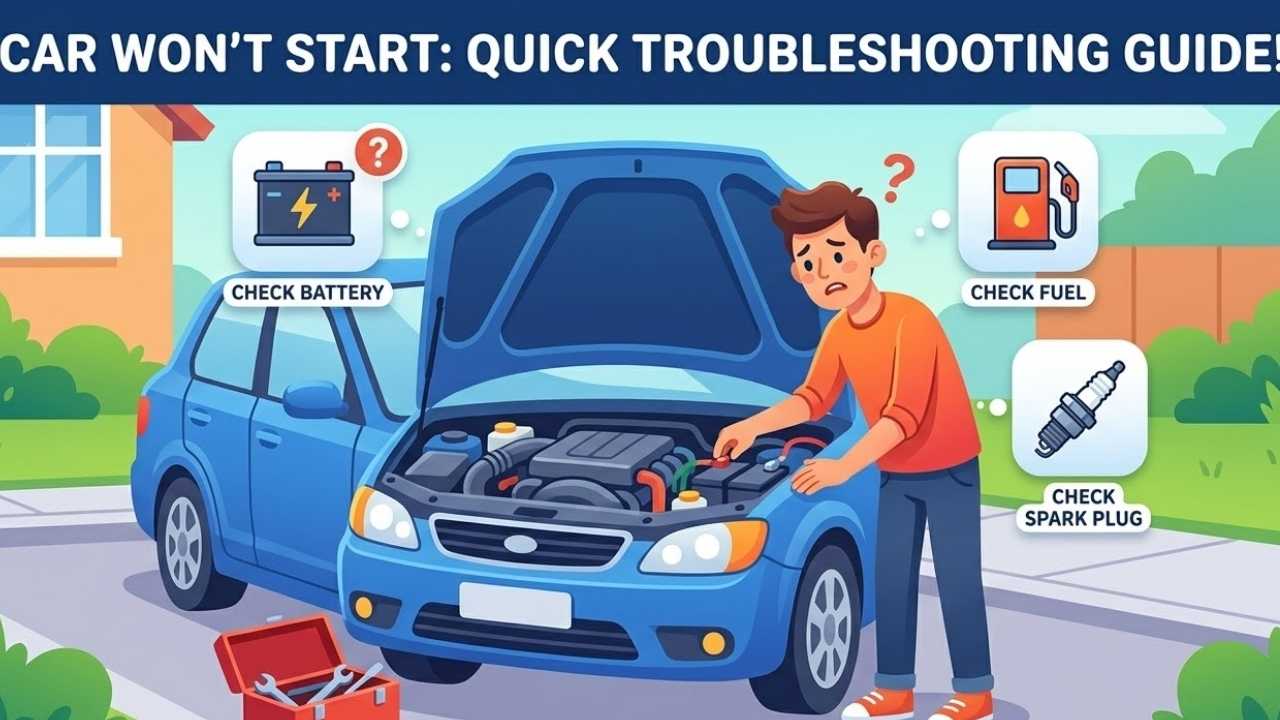
Lots of drivers or car owner have faced Troubleshooting in Starting their vehicle once in life. If you are nodding in yes while reading this line, then here we are to explain you how to start your car when faces simple issues. Just imagine you sit in your car and turn the key or press the start button, and suddenly the car refuses to start.
This happens in morning before work, while leaving a parking lot or even during trips. And this makes lot of people assume that something wrong has occur in their car. But that not the truth many times. Yes you read it right, a car may fail to start because of several simple issues such as battery problems, loose connections, fuel issues, or other small electrical faults.
Car Not Starting? Try These Checks
What did you mean when your car is not starting. Well, it simply means the engine is not turning on. Many times the car makes a clicking sound, sometimes the dashboard lights come on but the engine doesn’t respond, and in some cases nothing happens at all.
You must be wondering about the reason behind all these issues. Some are just common problems which you can check easily while some require expert help. So, read the below articles and get to know common things you can check first before assuming the problem is serious. These quick checks may help you understand what might stopping your car from starting.
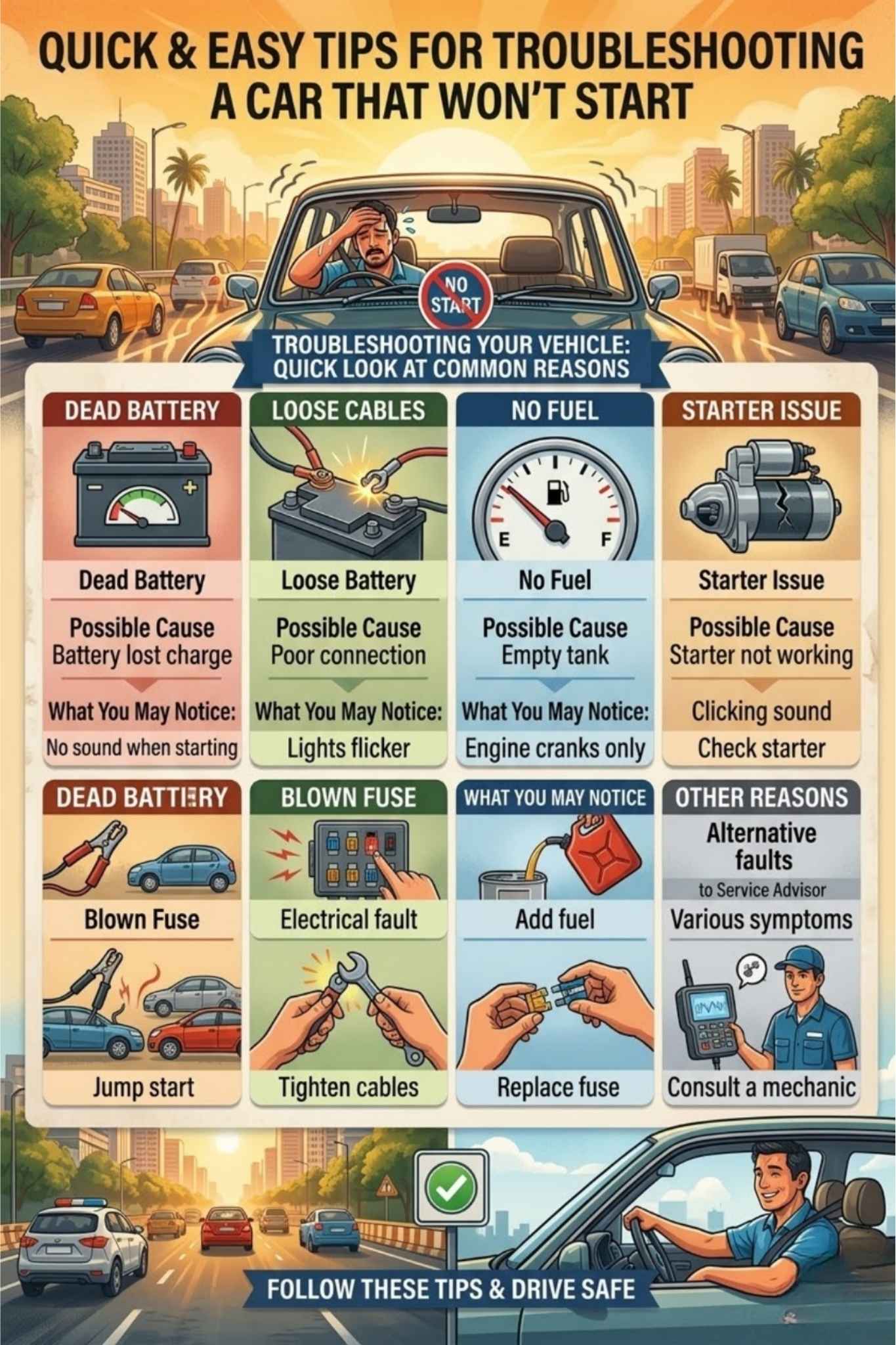
Quick Look at Some Common Reasons
| Problem | Possible Cause | What You May Notice | Simple Fix |
| Dead Battery | Battery lost charge | No sound when starting | Jump start |
| Loose Battery | Poor connection | Lights flicker | Tighten cables |
| No Fuel | Empty tank | Engine cranks only | Add fuel |
| Starter Issue | Starter not working | Clicking sound | Check starter |
| Blown Fuse | Electrical fault | Systems stop working | Replace fuse |
Check the Battery First
The battery is one of the most common reasons a car refuses to start. If the battery is weak or completely drained, the engine will not get enough power to turn on. You might notice that the dashboard lights are dim or that nothing happens when you try to start the car.
In some cases, you may hear a clicking sound. Trying a jump start with jumper cables can help confirm if the battery is the issue. If the car starts after a jump start, the battery may need charging or replacement.
Look at the Battery Connections
Sometimes the battery itself is fine, but the connections attach to it are loose or dirty. Battery terminals can collect rust over time, which may interrupt the flow of electricity. This can prevent the engine from starting even though the battery still has power.
Opening the hood and checking the battery cables can help. Tightening loose connections or cleaning rust may solve the problem.
Make Sure the Car Has Enough Fuel
This may sound silly, but running out of fuel is another reason a car may not start. If the fuel tank is empty, the engine may try to turn over but it will not actually start.
Checking the fuel meter is always a good step when troubleshooting a starting problem. Adding fuel may quickly solve the issue.
Listen to Sound Car Makes
The sound your car makes when you try to start it can give useful clues. For example, a rapid clicking sound may point to a weak battery. If the engine tries to crank but doesn’t start, the issue might connect to fuel delivery.
And if there is no sound at all, it could related to the ignition system or electrical connections. Paying attention to these small details can help narrow down the possible cause.
Check Simple Electrical Components
Cars rely on several electrical systems to start properly. Sometimes a blown fuse or small electrical fault can become issue in the starting process.
Looking inside fuse box and checking for damaged fuses may help identify problem. Replacing a blown fuse is usually a quick and inexpensive fix.
What You Should Keep in Mind?
Many cars have starting problems cause by weak battery, loose terminals, low fuel, or other parts failures. And out these issues, lots of car problems can repair or solve by you yourself that too with simple tools at home.
Yes, by the above details you must have got the idea that by giving few minutes of inspection to car can save time and prevent unnecessary repair costs.