
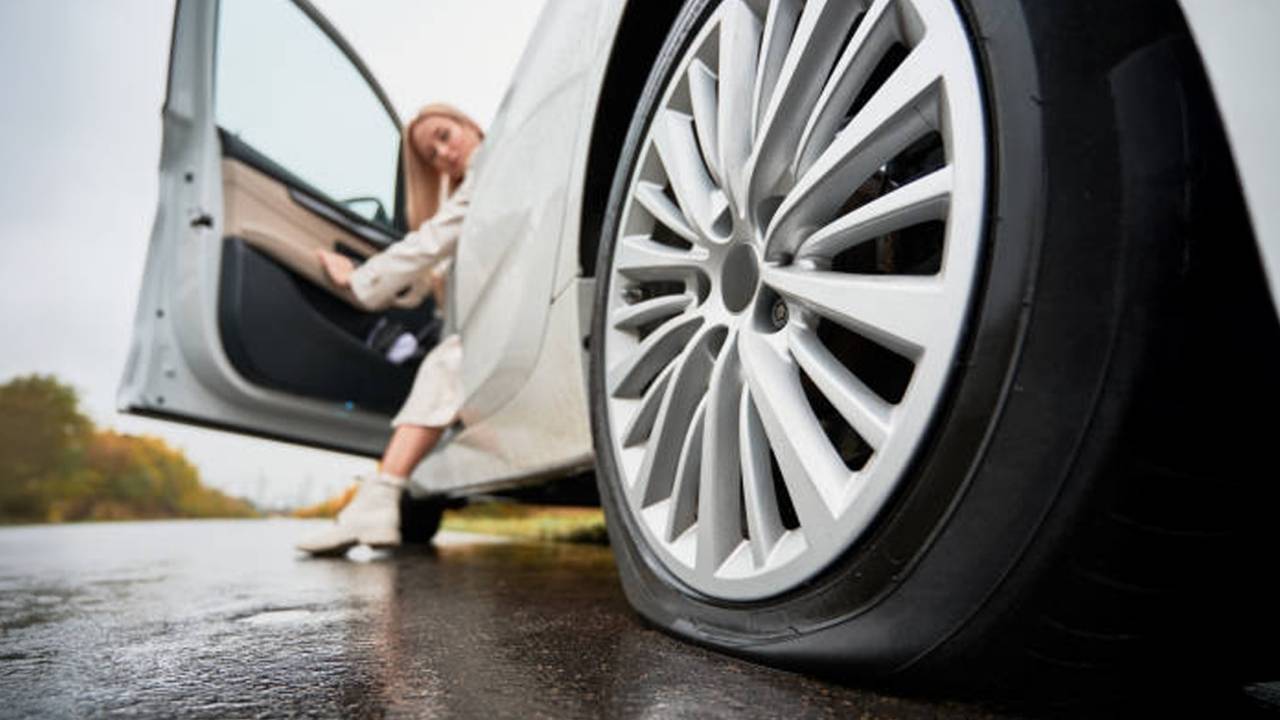
Any vehicles’ tyres look more important than the engine because they are attach to the road. Since 1839 to 2026 tyres change a lot and Tubeless Tyre were invented. Tubeless Tyres are better in safety and handling punctures. But many drivers still want to know how long a tubeless tyre can hold air after a puncture, does it last for hours or lose pressure quickly?. If you have same questions in mind, then this guide is for you.
What Happens When a Tubeless Tyre Gets Punctured?
The very first thing to know is when a tubeless tyre gets punctured, it does not lose air on time or quickly like old tube tyres. And the simple reasons behind this are that the tyres are tightly fitted with the rim, there is no inner tube to burst, and most punctures are small.
In many cases when tubeless tyre get puncture, the object stays stuck in the tyre which helps slow down the air leak. And because of this, the air comes out slowly instead of coming in single go which give you some time to repair the puncture.
Also Read: Practical Ways to Get the Maximum Fuel Efficiency From Your Car
How Long A Tubeless Tyre Hold Air Pressure After Puncture?
This is main question by lots of vehicle owners who use Tubeless Tyres. Saying 1, 2, 6 to 24 hour or any fix time of holding air pressure after puncture is totally fake. So, how to know for that the real world driving and tyre behavior matters a lot. On the basis of these factor time range a tubeless tyre can hold air pressure is as follows:
- If there is small puncture like nail or screw then your tyre can hold air pressure at least 6 hours to 24 hours and sometimes even longer.
- But if the object is higher or a medium puncture is there in tyre, then your tyre can hold air pressure only 1 to 6 hours.
- Sometime your tyre has big cut or sidewall damage which force air to lose quickly, in this case our tyre can hold air pressure only for few minute or 1 hour maximum.
Distance You Can Drive After a Puncture
Holding Air Pressure is different case and travel a distance is another case. So, how much distance you can drive after a puncture. To know this check points below:
- In case of small puncture you can travel 10 to 50 km.
- If there slow leak then ideal condition is up to 80 km.
- But if there is serious damage then it will run from 0 to 10 km only.
You may not get this number and reason behind are speed of your vehicle, load on vehicle like number of passengers & luggage, condition of road, and tyre pressure before puncture.
Why Tubeless Tyres Hold Air Longer?
The main purpose of Tubeless Tyres is to fit them very tightly within wheel rim. This create a strong air tight seal which stop air to move out quickly. And this is why even after a puncture, the tyre does not go flat immediately.
The other reason of holding air longer is no inner tube inside. Yes, in tubeless tyres there is just one small hole, so air leaks slowly instead of all at once. Some tubeless tyres also have a liquid sealant inside. This sealant can automatically close very small holes (around 3 to 5 mm) which helps to reduce or even stop air loss.
How Fast Does Air Pressure Drop?
To understand this you need a real life scenario. Suppose your tyre pressure is around 32 PSI which is normal for most cars then after a small puncture Air Pressure Drop like in one hour it goes upto 27 PSI, after 3 to 4 hours it drops upto 21 PSI, and in 6 to 8 hours the air pressure drop to 14 PSI. And once pressure goes below 20 PSI driving becomes unsafe and risky.
Factors That Affect Air Loss Speed
As we mention above that all puncture are not same and many things decide how fast the air will leak. Here are some common factors that affect loss of air speed.
- The very first this is size of hole, if there is small size hole of 2-3 mm then air will leak slowly but if there is bigger size hole of 5 mm or more then air will go out faster.
- Second things that control air speed is location of puncture. If the puncture is at middle then speed will slow and is not that harmful. But if the puncture is at sidewall then air speed will be faster and then is dangerous.
- Another factor object is inside or not. Yes, if the nail is still inside then air loss will be slow and sometime nail or object comes out automatically this will increase speed air faster.
- Speed at the time of puncture. Simple science behind this is at high speed more heat is generated due to friction and which become reason of faster air leak.
- Weight or load on your vehicle will create more pressure on tyre which become another reason of quick air loss.
Can You Drive After a Puncture?
Many drivers ask can they drive after a puncture. Simple answer is yes but there are some safety driving tips to follow during driving with a puncture tyre. These tips are:
- Drive slow (below 40 – 50 km/h).
- Avoid sharp turns and sudden braking.
- Keep checking tyre condition.
- Do not drive too far.
Change your destination to nearby repairing shop whether you need to go back.
How to Know Your Vehicle is Puncture While Driving?
During long drives or many times punctures are not visible. As sometime the tyre looks fine and still there is puncture. So, here are simple tips to know whether your vehicle is puncture:
- Steering feels heavy.
- Car pulls to one side.
- Vibration in steering.
- Tyre looks slightly flat.
- TPMS warning light turns on.
Drivers who notice any of these sign in their vehicle must stop the car as soon as possible.
What if Repairing Shop is Far?
Suppose you are driving on straight long highways or on such a road where you do not find any repairing shop. In these type of situation you need temporary solutions to fix this. Some of the best temporary solutions are:
- Carry Tyre Inflator or a small air pump to refill air temporarily.
- Use small puncture repair kit, use a rubber plug from this kit that can seal small holes.
- Nowadays, use of sealant spray is increase which use a foam that blocks air leakage.
One must remember that these are temporary solutions, not permanent solutions. So, fix this issue as soon as possible by visiting repairing shop.
When Should You Replace the Tubeless Tyre?
With puncture one extra thing come to everyone’s mind which is Tubeless Tyre Replace Timing. One direct thing to notice is you should replace a tubeless tyre when this is not safe to repair anymore.
Other things to check are like big size of hole, the damage on sidewall, or the tyre is worn out with very low tread. All these are sign to change your Tubeless Tyre. One must take this serious as it very unsafe and risky to drive this type of Tubeless Tyre Conditions.