
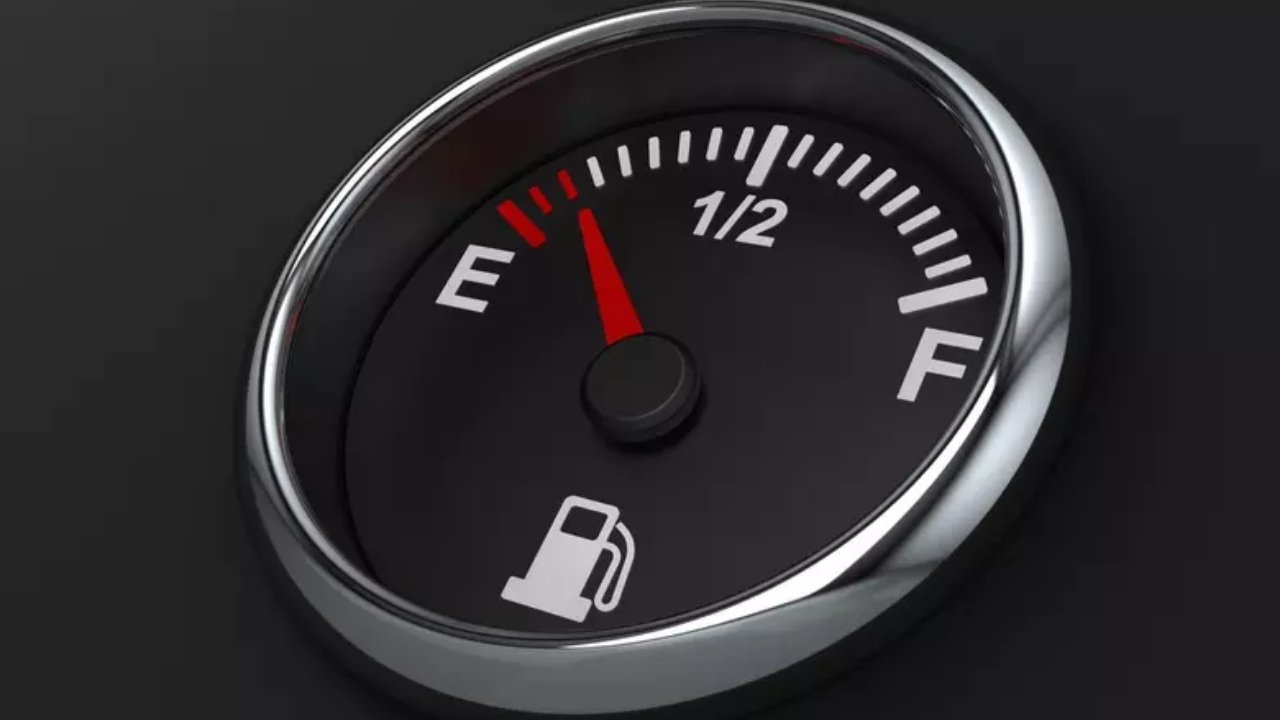
In every drivers life, the most fearful or disappointing point is flickering of low fuel warning light. The low fuel light brings lots of question in your mind like how far can I still go? Can you relax and keep driving for a while, or do you need to find a petrol pump right away?
During this Low Fuel Light On, some people keep going without worry while others get nervous the moment the light appears. The truth is that little light doesn’t mean your car will stop immediately but it also doesn’t mean you have unlimited distance left.
So, how far you can actually drive depends on your car and how you drive it. Sometimes you might still have enough to go quite a bit further and other times you might run out of fuel before reaching the distance you think.
Instead of thinking about how far you can go or how much you can actually drive with your car low fuel light on, it is best to understand the really meaning of it and how far you can safely go. To know this read the below post.
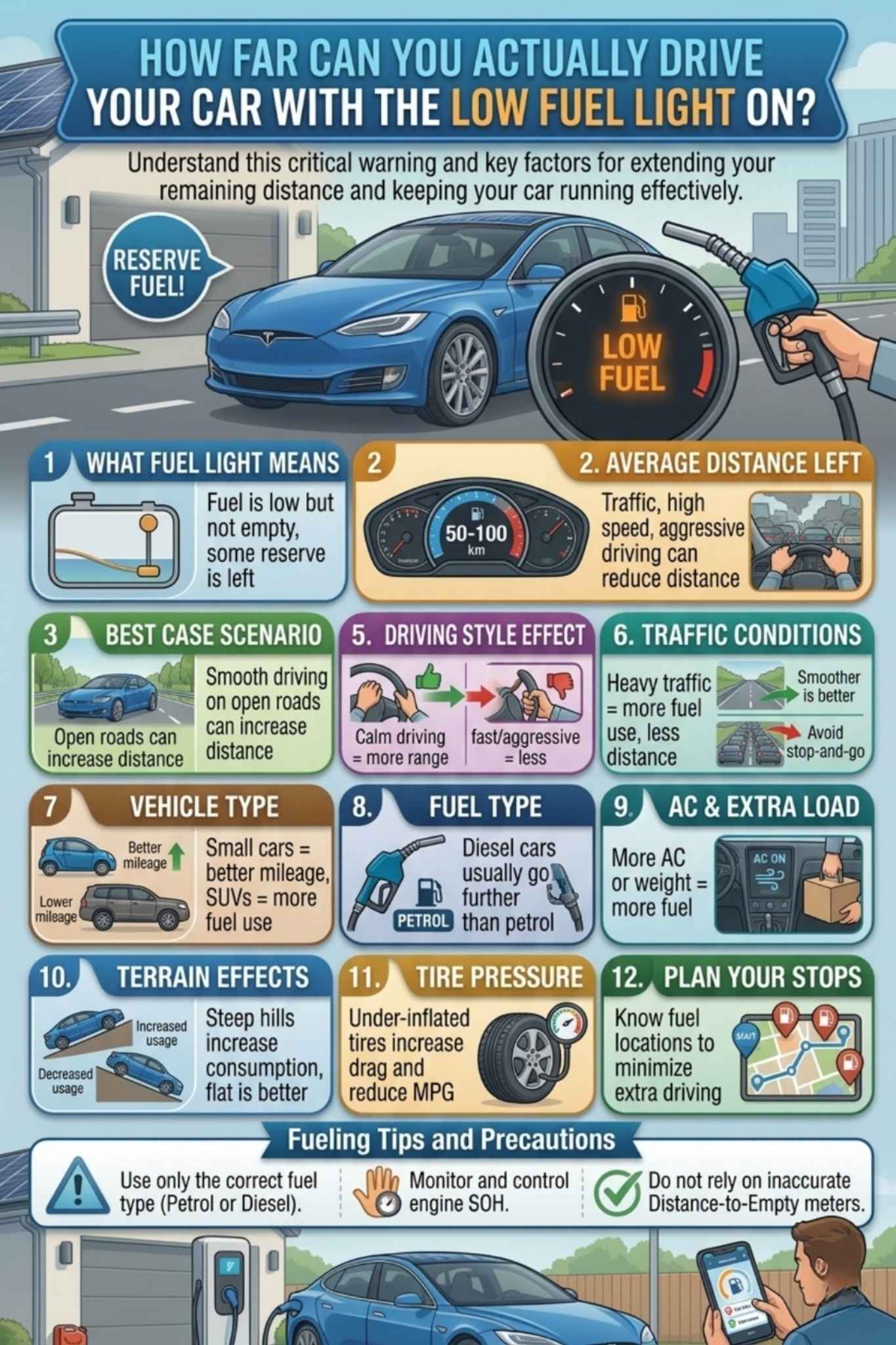
This is the question everyone wants a clear answer to but the truth is, there is no exact number that works for every car. In most cases, you can still drive around 50 to 100 kilometres after the low fuel light turns on. This is a general estimate base on how most cars are design.
As the above distance is unsure, sometimes you might able to go a little further and other times you might not even reach that range. All this depends on different factors that affect how quickly your car uses fuel.
So while it is helpful to know this average range, it is always better to treat it as a rough idea rather than something you can fully depend on.
Real Meaning of Low Fuel Light On
When the low fuel light appears on your dashboard, your car is not empty. There is still some fuel left in the tank. Car manufacturers design it this way on purpose so that drivers have enough time to reach a petrol pump safely.
This remaining fuel is call the reserve fuel. It acts like a backup fuel so that you are not left or stuck at a place which you can not get away from. The light turns on when your fuel level drops below a certain point, but that point is different for every car.
For some vehicles, the reserve look small. For others, it is look enough to reach a certain point. This is why two different cars can behave differently even if the fuel light turns on at the same time. So the fuel light is not something to panic about immediately, but it is definitely something you should not ignore.
Why the Distance Is Different Every Time
If you have ever notice that your car behaves differently each time the fuel light comes on, there is a reason for that. Several things affect how far you can still drive. Check out each affect by reading below points –
Driving Style
The way you drive has a big impact on fuel usage. If you accelerate quickly, brake suddenly, or drive at high speed, your car will use more fuel in a shorter time. On the other hand, if you drive smoothly and maintain a steady speed, your car becomes more efficient and can go further with remaining fuel.
Traffic Conditions
Traffic is another important factor. If you are stuck in heavy traffic where your car keeps stopping and starting, fuel consumption increases. This means your remaining distance is shorter. But if you are driving on an open road or highway where you can maintain a constant speed, your car will use fuel more efficiently and you can travel further.
Type of Vehicle
Not all vehicles consume fuel in the same way. A small car usually uses less fuel compare to a larger vehicle like an SUV. Diesel cars often give better mileage than petrol cars. So the type of car you drive plays a big role in how far you can go after the fuel light turns on.
Fuel Tank Size
Cars with larger fuel tanks often have a bigger reserve. This means they may allow you to travel a longer distance after the light comes on compare to cars with smaller tanks. Still, this does not mean you should rely too much on it, because fuel consumption still depends on other factors.
Use of AC & Extra Load
Using air conditioning at full power can increase fuel usage. Carrying extra weight in the car, like more passengers or heavy luggage, also makes the engine work harder. When fuel is already low, these small factors can make a noticeable difference.
Can You Trust Distance to Empty Display?
Many modern cars come with a feature that shows how many kilometres you can still drive before the fuel runs out. This is helpful, especially when the fuel light turns on. But, this number is not always completely accurate.
This distance is calculated base on your recent driving habits. If you suddenly start driving faster or get stuck in traffic, the number can drop quickly. So while it can guide you, it is not something you should depend on fully.
What Happens If You Ignore the Fuel Light?
Some drivers make a habit of ignoring the fuel light and trying to go as far as possible. While this might work a few times, it is not a good idea in the long run.
One obvious risk is that your car can run out of fuel completely. If this happens in the middle of a busy road or highway, it is dangerous and stressful.
Another problem is your car’s fuel pump. The fuel pump relies on fuel for cooling and proper functioning. When the fuel level is very low, the pump can overheat and get damage, which is expensive to repair.
There is also the issue of dirt and sediment inside the fuel tank. Over time, small particles settle at the bottom. When fuel is very low, these particles can get pull into the system and affect the engine. So while it may seem harmless to push your car a little further, doing it regularly can cause problems.
What Should You Do When Fuel Light Comes On?
The best thing to do is stay calm and act sensibly. The light is just a warning, not an emergency. Start by looking for the nearest petrol pump. You still have some distance left, so there is no need to panic. Try to drive smoothly and avoid sudden acceleration or high speed.
If possible, reduce unnecessary load on the car. For example, you can lower the use of air conditioning if you are really trying to stretch the remaining fuel. Planning ahead also helps. If you know your route, you can easily find a petrol pump before the situation becomes stressful.
Is It Safe to Regularly Drive on Low Fuel?
Driving on low fuel once in a while is not a big problem. Everyone face this situation at some point of life. But remember making it a habit is not safe. It increases the risk of breakdowns and can slowly affect your car’s performance. Over time, it also lead to higher maintenance costs.
So, it is always better to refill your tank before it gets too low. This not only keeps your car in better condition but also gives you peace of mind while driving.
A Simple Rule to Remember
There is an easy way to think about the fuel light. When the light turns on, it means you still have some fuel left, but not enough to ignore the situation. It is your signal to start planning for refueling as soon as possible. You do not need to panic, but you should not delay too much either.